

Lam Family Hung Kuen
Lam Family Hung Kuen is a complete Southern Shaolin martial art encompassing empty-hand forms, classical weapons training, and partnered sparring routines (Doy Da). Each area of training builds upon the others, forming a structured progression that develops strength, coordination, adaptability and practical martial skills.
The below overview is written for those who want to understand the depth of the Lam Family Hung Kuen system. Please know that beginners are welcome with zero experience — you don't need to know any of this before your first class.
Empty Hand Forms — The Foundation of Hung Kuen
Hung Kuen may be practiced alone or with a partner. When practiced individually, training is centred on forms — structured sequences of movements choreographed by past masters to preserve the core techniques and principles of the system.
These forms should not be viewed as fixed patterns. Rather, they are conceptual frameworks — a "dictionary" of movement. It is the responsibility of the practitioner to combine these movements into meaningful application, adapting them for real self-defence situations.
The Lam Family Hung Kuen curriculum progresses through key empty-hand forms. The empty hand forms trained at the Association include the following:
• Gung Gee Fook Fu Kuen (Taming the Tiger)
• Fu Hok Seung Ying (Tiger and Crane)
• Ng Ying Kuen (Five Animals Forms)
• Sup Ying Kuen (Five Animals Five Element Forms)
• Tid Sin Kuen (Iron Wire)
• Lau Gar Kuen (Lau Family fist)
• Chin Cheung (Arrow Palm)
• Ban Bo Kuen (Crushing Step Fist - Praying Mantis)
More details concerning the more famous Hung Kuen empty hand routines are set out below:
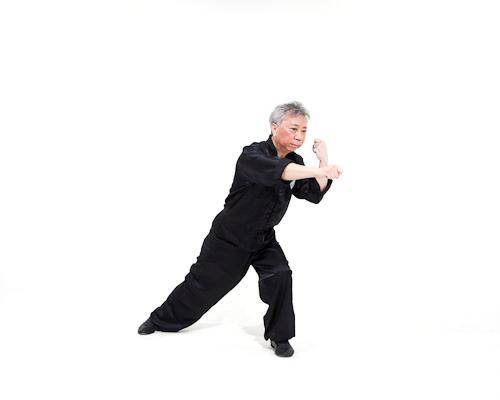
Yut Chau Yut Choi from Gung Gee by Sifu Lam Chun Chung
Gung Gee Fok Fu Kuen (Taming the Tiger)
The foundation of the system, Gung Gee develops:
- strong stance work (Sei Ping Ma, Ji Ng Ma, Cat Stance, Unicorn Step)
- bridge-hand training (Kiu Sau)
- simultaneous attack-and-defence techniques
- fundamental striking methods such as Fun Gum Choi, Long Sau and Tiger Claw
This form establishes the practitioner's structure, rooting and basic power. It is widely regarded as essential for building a solid base before progressing further.
.
Fu Hok Seung Ying Kuen (Tiger and Crane)
The Tiger & Crane form introduces the balance between hard and soft energies:
- Tiger: strength, forward pressure, gripping and striking
- Crane: precision, timing, evasion and control
The form expands the practitioner's skillset through techniques such as:
- Tiger claws (Seung Fu Jau, Darn Fu Jau)
- Crane beak deflections and attacks
- Lohan sequences including the famous double punch and Wave Punch combinations
Fu Hok bridges basic training with more advanced, realistic applications, and is often used to assess a student's overall ability.
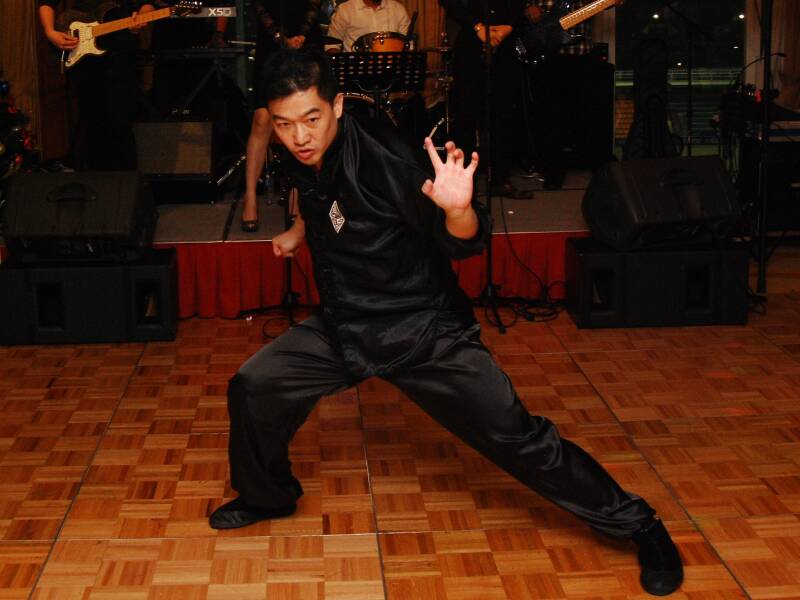
Performing at work function
Performance of Tiger and Crane at the 2018 HK Traditional Kung Fu Championships
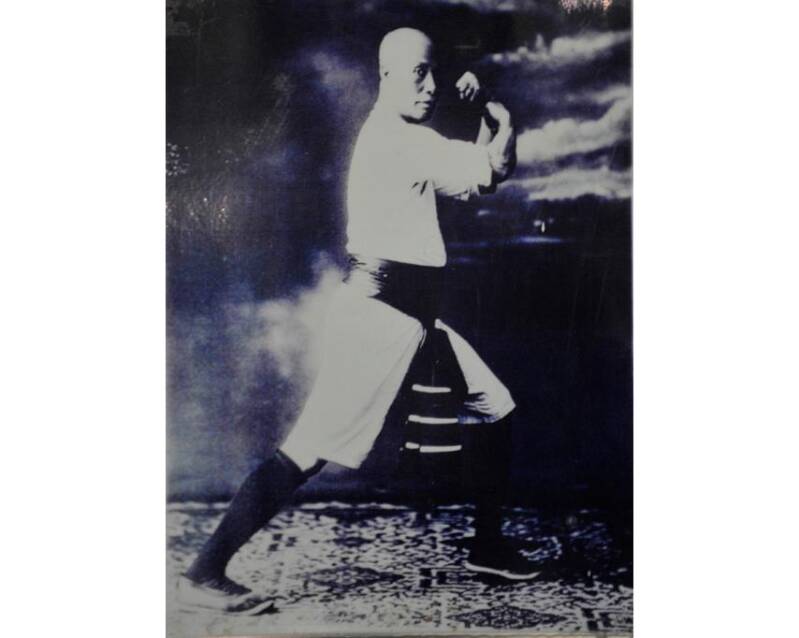
Iron Wire by GM Lam Sai Wing
Tit Sien Kuen (Iron Wire)
The culmination of empty-hand training, Iron Wire is the internal pillar of Hung Kuen.
It develops:
- dynamic tension and breathing control
- internal and external bridge-hand strength
- structural integrity and rooting
- overall health and vitality
Practiced in Yi Ji Kim Yeung Ma, it trains the Twelve Bridges of Hung Kuen and seeks to unify body, breath and intent. It represents the transition from purely external training to deeper internal cultivation.
Weapons Training - Extending the System
Hung Kuen includes a wide range of traditional weapons, each designed to extend the principles of empty-hand combat into longer ranges and more complex tactical scenarios. Weapons training develops coordination, strength, timing, and an understanding of distance and leverage, while reinforcing the body mechanics and principles found in the core system.
• Pek Kwa Dan Do (Single Sword)
• Dan Chi Fai Do (Commanders Sabre)
• Sung Moon Gim (Sung Moon Sabre)
• Kuan Lan Gim (Kuan Lan Sabre)
• Seung Long Do (Double Dragon Sword)
• Koi Chung Do / Dai Hang Seung Do (Butterfly Swords)
• Lau Gar Gwan (Lau Family Staff)
• Hang Che Pang (Monkey Staff or Double Ended Staff)
• Ng Lung Ba Gwa Gwan (Fifth Brother Eight Diagram Staff)
• Moi Fa Ying Cheong (Plum Blossom Spear)
• Dai Kwan Do (General Guan's Halberd)
• Yiu Gar Dai paa (Yiu Family Tiger Fork)
• Moi fa siu tiu (Plum Blossom Halberd)
• Dan Bien (Single Chain Whip)
• Seung Bien (Double Chain Whip)
The full weapons curriculum is taught within the Association. However, certain adaptations may be required from time to time to ensure compliance with applicable legal and safety requirements. For more detailed description concerning the above weapons forms please refer to https://www.lamkahungkuen.com/foams.html.
However, please see some examples of weapons training as set out below.
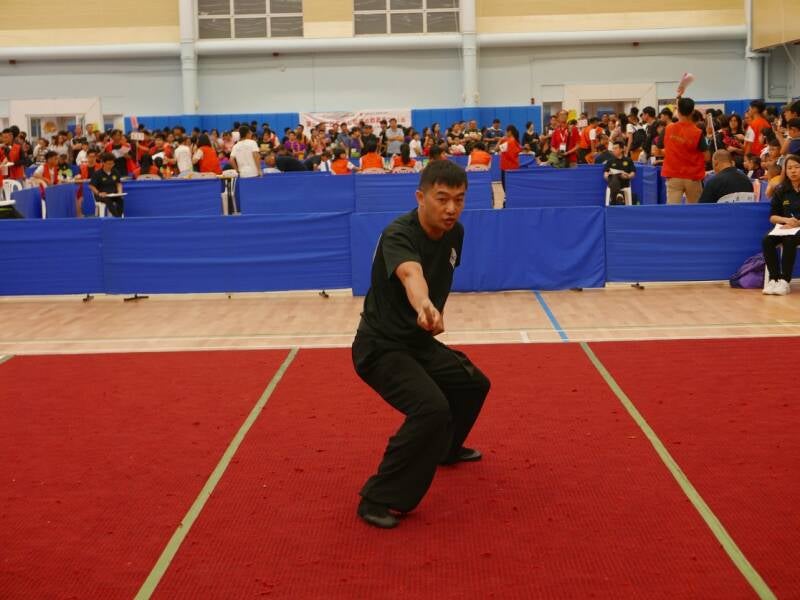
Performing Ng Long Batwa Gwan at the Hong Kong Traditional Kung Fu Championships
Ng Long Batgwa Gwan (Fifth Brother Eight Diagram Staff)
One of the most important long-weapons forms, this set originates from Yeung Ng Long and is structured around traditional Chinese cosmology.
It develops:
- long-range power and control
- circular blocking and striking
- thrusting precision and deflection
- whole-body coordination driven by the waist
The Lam Family version includes the Six-and-a-Half-Point Staff, expanding the form into a comprehensive pole system.
Seung Long Do (Double Dragon Swords)
A more refined double-weapon system, Double Dragon Swords train:
- precision and control
- mirrored and independent hand coordination
- fast directional changes
- slicing, thrusting and deflecting techniques
This set develops dexterity, balance, and advanced weapon handling skills.
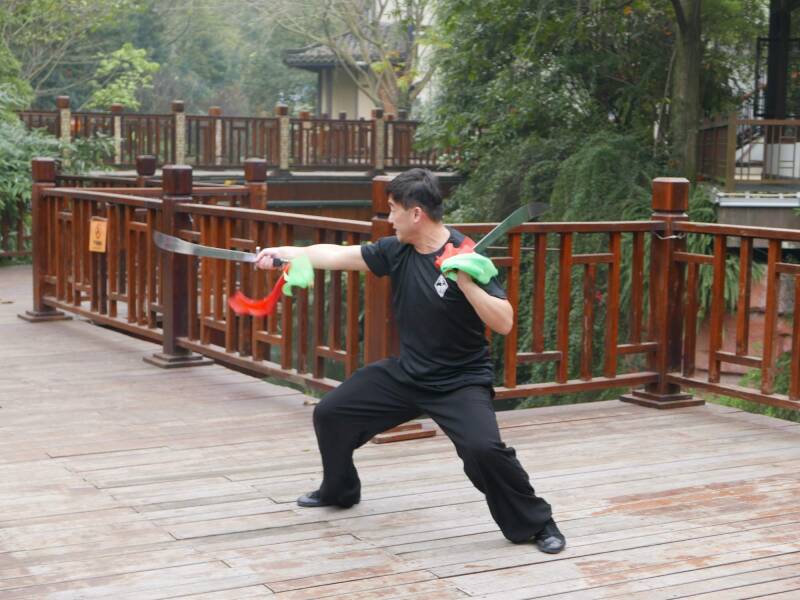
Practicing Seung Long Do before 2017 World Kung Fu Championships in Emeishan
Dai Hang Yut Seung Do (Large Circular Double Broadswords)
These powerful double weapons emphasise:
- circular cutting actions
- coordinated use of both hands
- agile stepping and turning
- integrated waist and upper-body power
This form represents the strong, flowing power characteristic of Southern Shaolin broadsword training.
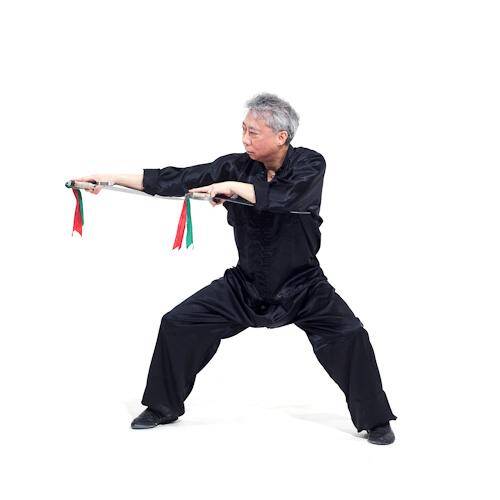
Butterfly swords by Sifu Lam Chun Chung
Sparring Routines
One of the most distinctive features of Hung Kuen is its collection of sparring sets (Doy Da). These are choreographed partner routines designed to bridge the gap between individual forms and real combat application.
Through practising sparring sets, students develop:
- timing and rhythm
- accuracy and control
- distance management
- spatial awareness
- reflexes without anticipation
Although structured, these routines must be practiced dynamically, with both partners matching speed, intent and precision.
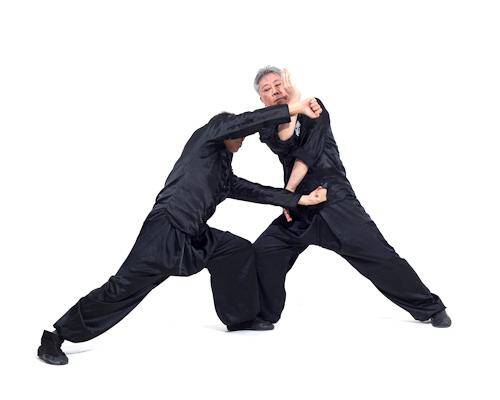
Tiger and Crane Sparring by Sifu Lam Chun Chung and Sisuk Lam Chun Sing
Lam Family Hung Kuen Sparring sets
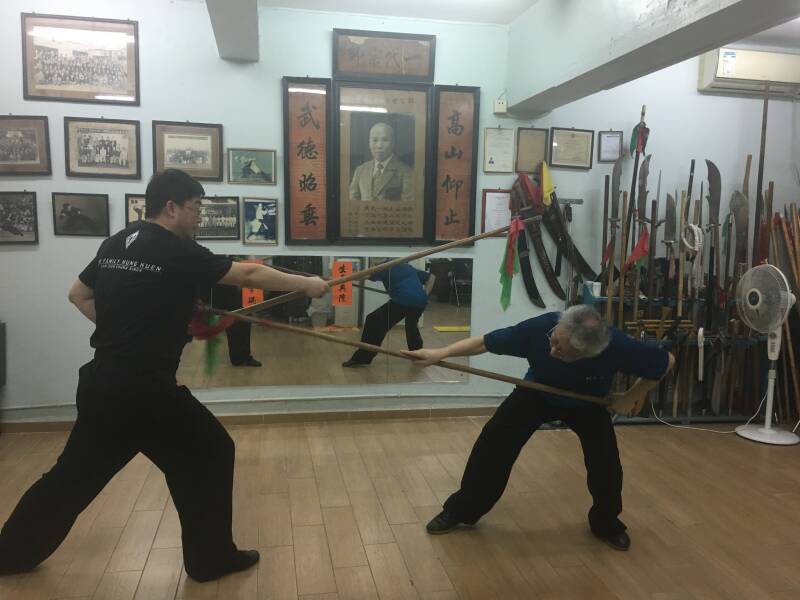
Ng Long Batwa Gwan applications and sparring with Sifu Lam Chun Chung
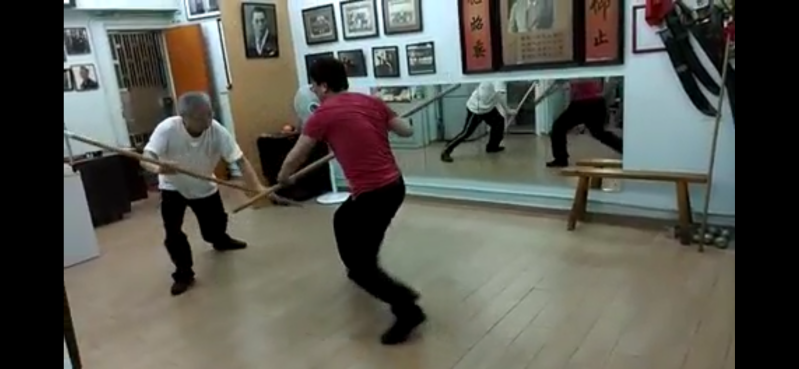
Double Ended Staff Sparring with Sifu Lam Chun Chung
- Gung Gee Doy Da — by Lam Sai Wing
- Fu Hok Seung Ying Doy Da — by Lam Cho
- Seung Tao Kwan Doy Da — spear vs spear
- Ng Lung Ba Gwa Gwan Doy Da / Tan Tao Kwan Doy Da — staff sparring
- Darn Do Chin Cheong — single broadsword vs staff
- Seung Do Chin Cheong — double broadswords vs staff
- Kwan Do Doy Cheong — Kwan Do vs staff
- Seung Bei Sau Doy Cheong — double daggers vs long weapons
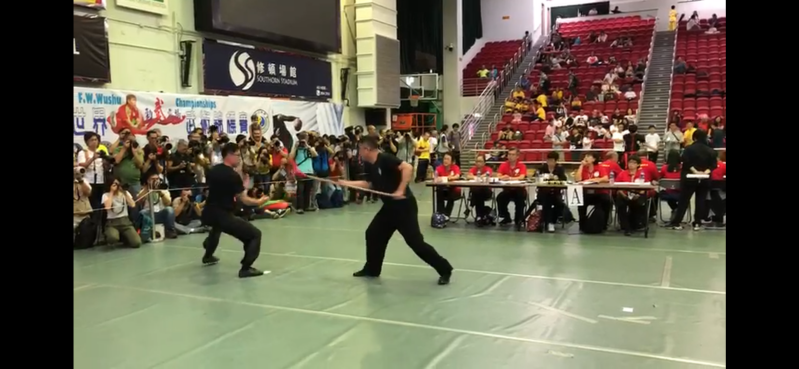
Broadsword vs Spear performance with Kung Fu Brother Yeung Chung Bo
Create Your Own Website With Webador